
It should not take us a visit to historical landmarks to handle our freedom with the respect it deserves. As a nation, we are rejoicing and leading our lives as we want based on the heroic struggles of our ancestors — thousands of nameless people who laid down their lives so we can live and breathe freely.
Sometimes we forget.
That’s when a trip down our history helps. No trip to Andaman is complete without a visit to the famous cellular jail or kala pani. Kala pani — dark waters or the end of life surrounded by water? Either way — dark and foreboding.
The cellular jail was built by the Britishers in Andaman between 1896 and 1906 to house convicts and political prisoners of the Indian freedom struggle. Andaman itself was used as a place to exile freedom fighters much before the jail was built.
The building with a central tower and seven arms stretching out is an architectural marvel. A single guard in the central tower could keep an eye on the entire jail that could house more than 700 prisoners at a time. We didn’t really need that architectural marvel to be built on the graves of so many Indians. But it is there. And it serves as a huge memory of their sacrifice.
We clicked a few group photos outside the building. Then we stepped in. Selfies and group photos were forgotten. Everything else was forgotten. A sense of heaviness descended upon us. There was something in the very air. As a friend said, “Feels like the spirits of the prisoners are still here.”
We were on the brink of tears without our knowledge. One look at some of the depictions of torture and the devices used was enough to tip us over. I could not contain the deep sense of sorrow that engulfed me. I rushed out of the museum room to find two others in our group in the same state — crying copiously. The stories were overwhelming.
Meanwhile, others wanted details. They wanted to know as much as they could so as to understand and feel. We hired a guide for our group. The passion with which the guide was explaining everything struck a chord. This was no ordinary guide just doing his job — he was someone who knew a lot, felt deeply, and wanted to communicate that feeling to his audience.
But his empathetic explanation only served to make it worse for a few of us. We decided to skip the next couple of stops — the oil mill and the gallows. The oil mill is where our freedom fighters were beaten and flogged mercilessly while they rotated the machinery to generate coconut oil. Enough said. We did not need to see the models to visualize the barbarism.
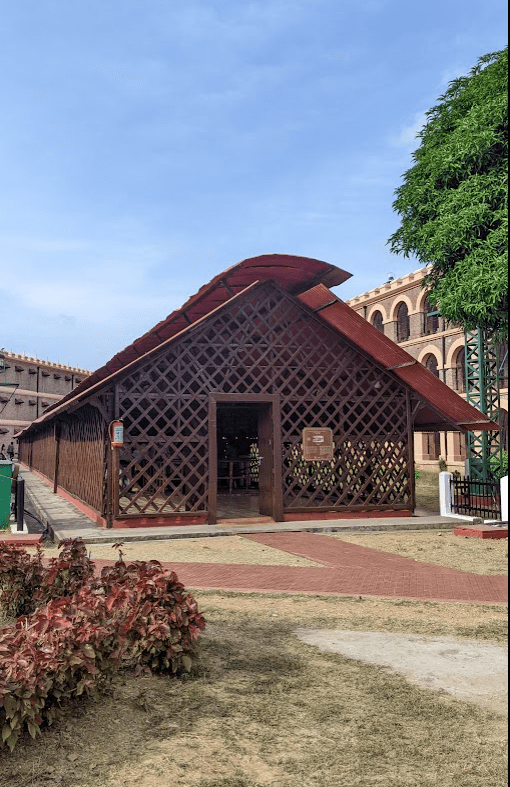
The entrance to the oil mill looks so pretty set against the blue sky and surrounded by lush greenery. We could be forgiven for being swayed by the beauty and peace of the place. Luckily, the heaviness in the air prevented us from forgetting.
Our next stop in the guided tour was the cells where the inmates were housed — imprisoned for the horrible crime of wanting to be free. Imagine wanting freedom! So they were incarcerated in tiny identical cells and rotated periodically to disorient them and prevent any long-term recognition that might help them escape. Escape indeed! What awaited them outside the cellular jail was the deep, blue sea. Where would they swim off to?
We heard from the guide that the cells in each tower were built in such a way that the entrance of one block faced the back of the next. There was no way for the inmates to communicate.

I could go on. But only a visit and listening to some of the stories will make anyone understand the feelings the place evokes. When a couple of us were huddled outside the oil mill waiting for the others, the guide joined us. He said he sensed how deeply we felt. He talked about how he watches the eyes of the people gathered around him when he narrates his stories. “The eyes reveal whether they are genuinely interested or just drifting along,” he said. Our eyes were wet. He smiled knowingly.
None of us in our group clicked a single selfie. That’s saying something for a group of 11 photo-crazy women. We were all humbled, the weight of the sacrifices hanging heavy on us. Who were these people? What were they made of? How did they stay motivated in a place like this with inhuman treatment from fellow humans? What drives humans to treat other humans in such a ruthless manner?
So many questions. The only loud and clear answer:
Do not take your freedom lightly!
 Anu Anniah Writes